
Blood Tests Worth Asking For Before You Buy Another Supplement
Updated 16 August 2026Review DeskAbout 7 min
Key points
- A basic panel typically costs less than a single supplement package and answers questions guessing cannot.
- Testosterone must be sampled in the morning and a low result repeated before acting on it.
- Thyroid dysfunction and iron deficiency both produce symptoms routinely attributed to low testosterone.
- 'Normal' ranges vary between laboratories, so results need interpreting alongside symptoms.
Why testing beats guessing
Here's an uncomfortable comparison. A six-bottle supplement package costs a few hundred dollars and tells you nothing about your body. A basic blood panel often costs less and tells you a great deal.
The symptoms driving most men toward supplements — fatigue, low motivation, reduced libido, poor concentration — are genuinely non-specific. They're consistent with low testosterone. They're equally consistent with thyroid dysfunction, iron deficiency, prediabetes, depression, sleep apnea and simply being chronically under-slept.
Guessing between those and buying a product aimed at one of them is a poor strategy. Testing collapses the guesswork.
This isn't an argument against supplements. It's an argument about sequence. Our product assessment takes the same position: a supplement sits at the margins of a routine, and margins are worth optimising only after the larger variables are known.
Testosterone, done properly
If you're going to test one thing, this is the obvious candidate — but the details matter more than most men realise.
Ask for total testosterone, free testosterone and SHBG together. Total alone can mislead. SHBG (sex hormone binding globulin) binds testosterone and tends to rise with age, so a man can have acceptable total testosterone with less free testosterone available.
Timing is not optional. Testosterone follows a daily rhythm peaking in the morning. The sample should be taken in the morning, generally before 10am. An afternoon sample can read meaningfully lower and mean nothing.
Repeat a low result. Levels fluctuate day to day. A single low reading should be confirmed on a separate morning before anyone acts on it. Any clinician acting on one result is moving too fast.
Thyroid function
Underactive thyroid produces fatigue, weight gain, low mood, cold intolerance and reduced libido. That list overlaps almost completely with what men attribute to low testosterone, and it's treatable.
Ask for TSH and free T4 as a minimum. TSH alone is the common screening approach but doesn't always tell the full story.
This is one of the more frequently missed explanations, partly because the symptom onset is gradual enough to be attributed to ageing.
Ferritin and full blood count
Iron deficiency is underconsidered in men, largely because it's associated with menstruating women. But it happens — through gastrointestinal blood loss, poor absorption, or endurance training — and it produces profound fatigue.
Ask for ferritin alongside a full blood count. Ferritin reflects iron stores and can be low well before anaemia appears on a blood count. A man can be significantly iron-depleted with normal haemoglobin.
One important caveat: unexplained iron deficiency in an adult man warrants investigation of the cause rather than just supplementation. It can indicate gastrointestinal bleeding, which needs looking at.
HbA1c
HbA1c reflects average blood glucose over roughly three months, so it isn't affected by what you ate that morning.
It matters here for two reasons. Elevated blood glucose damages blood vessels over time, which affects circulation broadly. And prediabetes is common, often symptomless, and highly responsive to intervention when caught early.
It's also worth having as a baseline even if normal, because the trend over years is more informative than any single reading.
Vitamin D
Deficiency is common, particularly in northern latitudes, in men who work indoors, and in those with darker skin.
Low vitamin D is associated with fatigue and low mood, and observational research has noted associations with testosterone levels — though the causal picture is less settled than supplement marketing implies.
What's clear enough: if you're deficient, correcting it is cheap and sensible. If you're not, supplementing further doesn't appear to add benefit. Testing tells you which situation applies, which is precisely the point.
Reading your results
Two things surprise people.
Reference ranges vary between laboratories. A result flagged "normal" at one lab might sit at the boundary elsewhere. Ranges are also typically derived from a general population, not from optimal health.
Normal isn't the same as fine. A result at the bottom of the range combined with genuine symptoms is worth discussing rather than dismissing. Equally, a result in range with no symptoms doesn't need action.
This is a conversation for a clinician who can see your full picture — medications, weight, sleep, other results together. It isn't something to interpret from a website, including this one.
What to do afterwards
If something is genuinely off, you now have a treatable finding rather than a guess — and treating an actual deficiency or condition will do considerably more than any supplement.
If everything comes back unremarkable, that's genuinely useful too. It redirects attention to the things that don't show on a blood panel: sleep quality, body composition, sustained stress and alcohol.
And if you've addressed those and still want a simple daily addition, that's the point at which a supplement becomes a reasonable marginal decision rather than a substitute for information. Our buyer's guide covers how to evaluate one properly.

Our verdict on Primordial Vigor X
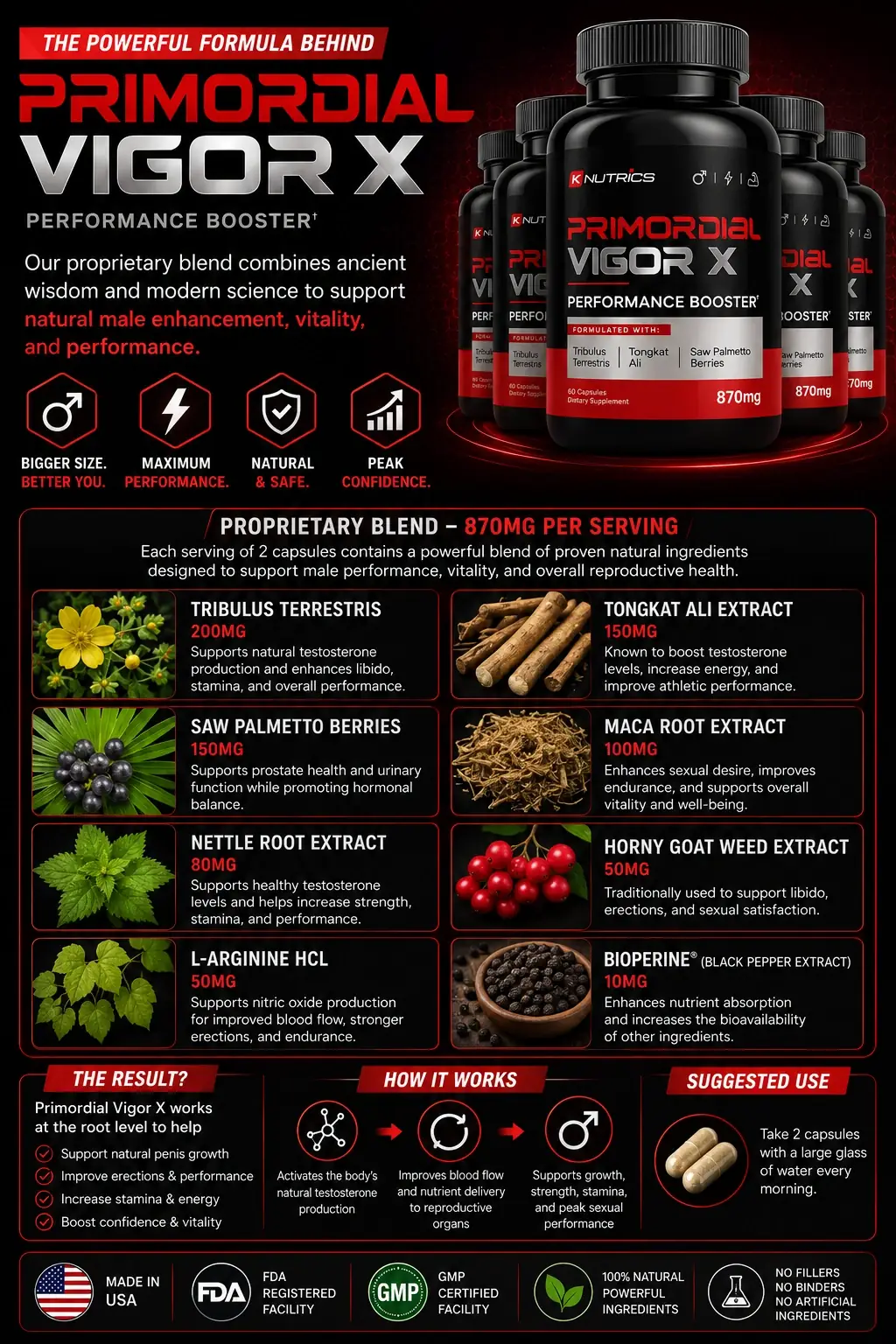
Good refund terms, opaque formula, overstated marketing elsewhere. We weigh all three on the main assessment page.
Individual results may vary. This is a dietary supplement, not a medication.
Check Current Price →Common questions
Which blood tests are most useful for men?
Total and free testosterone with SHBG, thyroid function (TSH and free T4), ferritin with a full blood count, HbA1c, and vitamin D cover the most common explanations for persistent fatigue and low libido.
When should a testosterone test be taken?
In the morning, generally before 10am, because testosterone follows a daily rhythm peaking early. A low result should be repeated on a separate morning before acting on it.
Can iron deficiency affect men?
Yes. It can result from gastrointestinal blood loss, poor absorption or endurance training, and it causes profound fatigue. Unexplained iron deficiency in a man warrants investigation of the cause.
Does a 'normal' result mean nothing is wrong?
Not necessarily. Reference ranges vary between laboratories and are derived from general populations. A result at the low boundary combined with genuine symptoms is worth discussing with a clinician.
Primordial Vigor X Review Desk Written and maintained by our editorial team. We do not employ or cite medical professionals, and this is general information rather than medical advice. We may earn a commission from qualifying purchases, which does not influence what we publish — see our editorial policy.
Medical note
This article is general information, not medical advice, and does not substitute guidance from a certified health professional. If you have persistent symptoms, see a doctor rather than relying on a website or a supplement.
Any dietary supplement discussed is for adult men 18 and over, is not intended for women or anyone pregnant or breastfeeding, and is not intended to diagnose, treat, cure or prevent any disease.
These statements have not been evaluated by the Food and Drug Administration. Individual results may vary.
Back to the Primordial Vigor X verdict, or see what the label doesn't disclose and our eight-point buyer's guide.