
Sleep and Male Hormones: The Lever Most Men Ignore
Updated 16 August 2026Review DeskAbout 7 min
Key points
- Restricting sleep to around five hours for one week has been shown to reduce daytime testosterone measurably in healthy young men.
- Most hormone release happens during deep sleep, concentrated in the first half of the night.
- Sleep apnea is common in men over 40, substantially underdiagnosed, and produces exactly the symptoms attributed to ageing.
- A consistent wake time does more for sleep quality than a consistent bedtime.
The scale of the effect
Most men evaluating a supplement for energy or vitality have not seriously examined their sleep. That ordering is backwards, and the research explains why.
Sleep restriction studies are among the cleaner pieces of evidence in this whole area. Work restricting healthy young men to around five hours a night for a week has shown measurable reductions in daytime testosterone — a decrease of a magnitude that would take many years to accumulate through ordinary age-related decline.
Read that comparison carefully. A single bad week of sleep can affect hormone levels more than a decade of getting older. And unlike ageing, it's reversible within days.
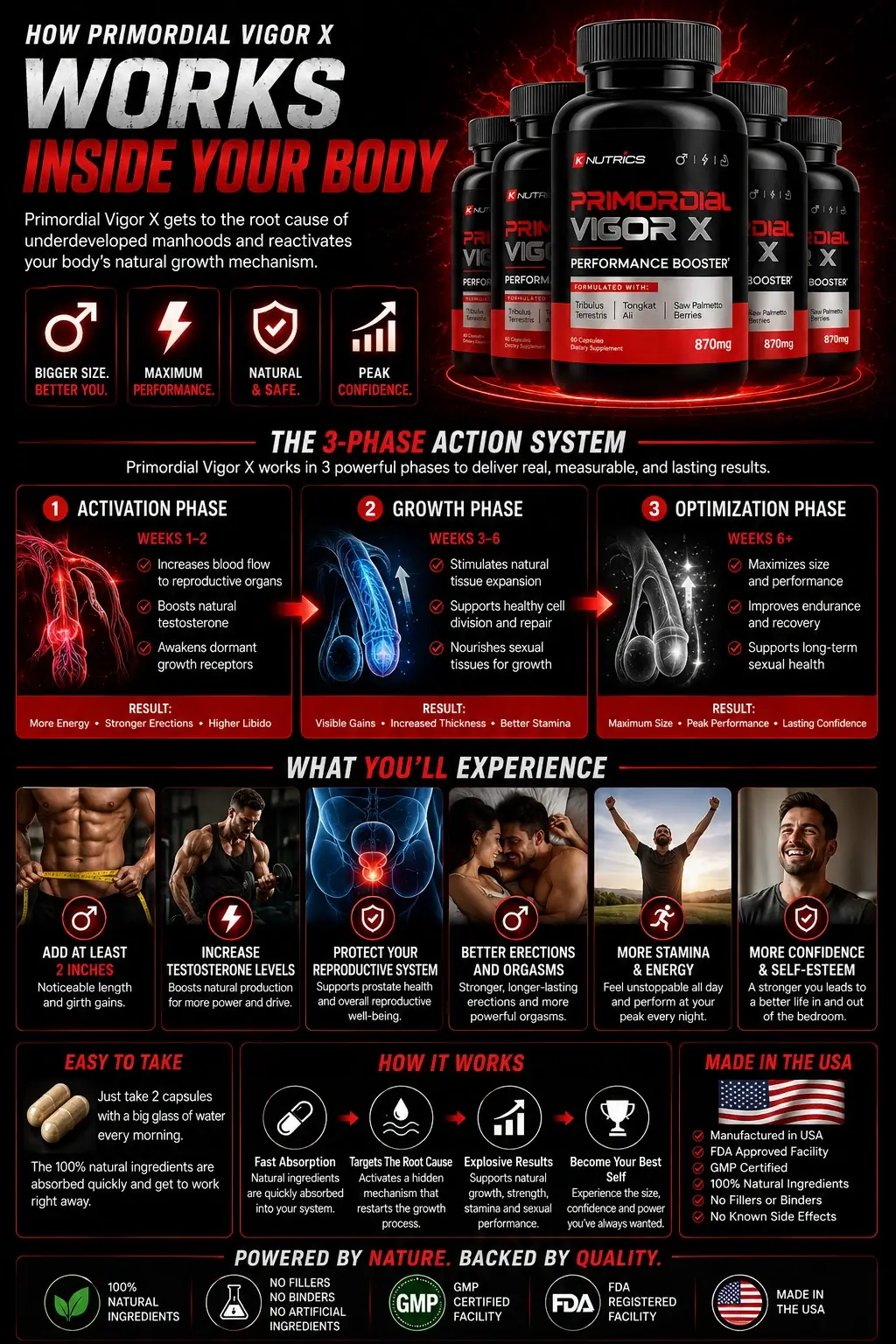
This is the reason we put sleep ahead of supplementation in every guide on this site, including our assessment of Primordial Vigor X. A supplement operating at the margins can't compensate for a variable operating at that scale.
When hormone release happens
Sleep isn't uniform. It cycles through stages, and the deep slow-wave stages are concentrated in the first half of the night.
That's when the majority of overnight hormone release occurs. Testosterone follows a daily rhythm peaking in the early morning, and that peak depends on having had adequate deep sleep beforehand.
Two practical implications. First, going to bed at 2am and sleeping until 10am isn't equivalent to 11pm until 7am, even at identical duration — circadian timing affects sleep architecture. Second, anything fragmenting the first half of the night is disproportionately costly.
The condition most men miss
Obstructive sleep apnea deserves its own section because it's common, badly underdiagnosed, and produces precisely the symptom cluster men attribute to ageing or low testosterone.
Fatigue despite adequate hours. Morning headaches. Reduced libido. Poor concentration. Low mood. Every item on that list appears on supplement marketing symptom checklists — and every item can be caused by breathing repeatedly stopping overnight.
The associations with reduced testosterone and with erectile difficulty are well documented. So is the finding that treating apnea improves both in many men.
Signs worth acting on: loud snoring, witnessed pauses in breathing, waking unrefreshed after seven or eight hours, morning headaches, or falling asleep unintentionally during the day.
If several of those apply, ask a doctor about a sleep study. It costs less than a six-bottle supplement package and answers a question no supplement can.
Alcohol and the sleep myth
Alcohol helps you fall asleep faster and makes your sleep considerably worse. Both things are true, which is why the myth persists.
It suppresses REM sleep in the first half of the night, and as it metabolises it produces a rebound effect — fragmented, light sleep in the second half. You spend eight hours in bed and get perhaps five hours' worth of restoration.
The practical rule that works: nothing within three hours of bed. If you're going to drink, drink earlier.
This is also the most common reason men report "getting eight hours" while feeling as though they got four.
What actually fixes it
In order of impact, and none of it costs anything.
A consistent wake time, seven days a week. This does more than a consistent bedtime, because it anchors the whole circadian system. Weekend lie-ins feel restorative and undermine the following week.
Morning daylight within an hour of waking. Ten minutes outside sets the timing signal that determines when you get sleepy that evening. More effective than most sleep supplements and free.
An early-afternoon caffeine cutoff. Caffeine's half-life is roughly five to six hours. A 3pm coffee means a meaningful proportion is still circulating at 9pm — it may not stop you falling asleep, but it reduces deep sleep specifically.
A cool, dark room. Core temperature needs to drop for sleep onset. This matters more than most sleep gadgets.
Consistency over duration. Seven hours every night beats six on weeknights and ten at weekends.
How to tell if it's working
Not by how you feel in bed — by how you feel at 3pm.
The useful marker is whether you need caffeine to function through the afternoon, and whether you wake before your alarm on most days. Both are more informative than sleep-tracker scores, which measure sleep poorly and are frequently anxiety-generating.
Give any sleep change three weeks. The first few nights of an earlier caffeine cutoff feel worse before they feel better.
Where supplements sit
After all of the above, honestly.
If you're sleeping five hours, no daily supplement will meaningfully change how you feel — the variable it operates on is dwarfed by the one you're ignoring. That's not a criticism of any particular product; it's arithmetic.
Once sleep is in reasonable shape, a simple daily supplement is a defensible marginal addition. That's the framing we apply in our Primordial Vigor X verdict and in our buyer's guide.
And if you suspect apnea, get the study before you buy anything. Our guide to blood tests worth requesting covers the other investigations worth prioritising over a purchase.

Our verdict on Primordial Vigor X
Good refund terms, opaque formula, overstated marketing elsewhere. We weigh all three on the main assessment page.
Individual results may vary. This is a dietary supplement, not a medication.
Check Current Price →Common questions
How much does sleep affect testosterone?
Research restricting healthy young men to around five hours nightly for one week has shown measurable reductions in daytime testosterone — a decrease comparable to many years of ordinary age-related decline.
Why does deep sleep matter specifically?
Most overnight hormone release occurs during deep slow-wave sleep, which is concentrated in the first half of the night. Anything fragmenting that period is disproportionately costly.
What are the signs of sleep apnea?
Loud snoring, witnessed pauses in breathing, waking unrefreshed after seven or eight hours, morning headaches, and falling asleep unintentionally during the day.
Does alcohol help or hurt sleep?
It helps you fall asleep faster and makes the sleep itself considerably worse, suppressing REM early and fragmenting the second half of the night.
Primordial Vigor X Review Desk Written and maintained by our editorial team. We do not employ or cite medical professionals, and this is general information rather than medical advice. We may earn a commission from qualifying purchases, which does not influence what we publish — see our editorial policy.
Medical note
This article is general information, not medical advice, and does not substitute guidance from a certified health professional. If you have persistent symptoms, see a doctor rather than relying on a website or a supplement.
Any dietary supplement discussed is for adult men 18 and over, is not intended for women or anyone pregnant or breastfeeding, and is not intended to diagnose, treat, cure or prevent any disease.
These statements have not been evaluated by the Food and Drug Administration. Individual results may vary.
Back to the Primordial Vigor X verdict, or see what the label doesn't disclose and our eight-point buyer's guide.